
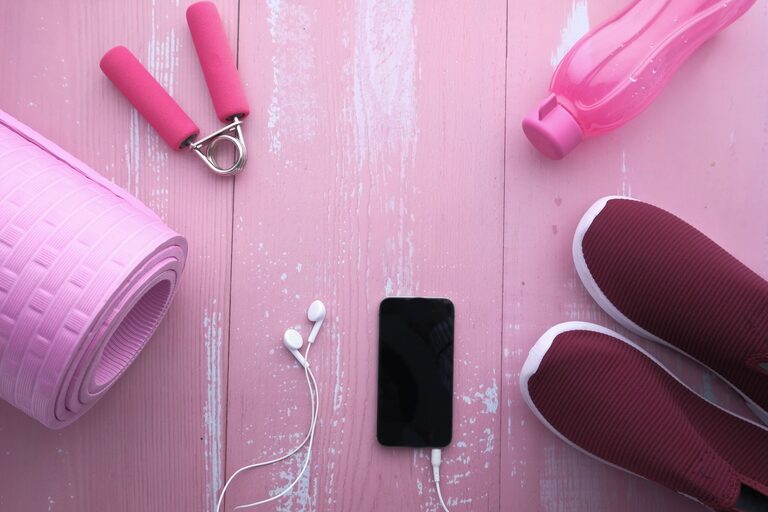
Strength training does not require a gym or expensive equipment. With a few everyday household items and your own body weight, you can create a simple routine that works your legs, arms, chest, back, and core.
The key is to choose safe objects, use controlled movements, and begin with a level that feels manageable. As the exercises become easier, you can gradually add repetitions, extra sets, or a little more weight.
Getting Started Safely
Before exercising, clear enough space to move comfortably. Wear supportive shoes if needed, and check that the floor is dry and free of clutter.
Choose household items that are sturdy and easy to hold. Good options include:
– Full water bottles
– Cans of food
– A backpack
– Books
– A laundry basket
– A firm chair
– A towel
Avoid using glass containers, unstable furniture, or objects with sharp edges. When using a chair, place it on a non-slip surface and check that it does not wobble.
Start with five to ten minutes of gentle movement, such as marching in place, shoulder circles, and easy bodyweight squats. Move slowly enough to maintain control, and stop if you feel sharp pain, dizziness, or unusual discomfort.
1. Backpack Squats
A backpack can provide adjustable resistance for your legs and hips. Fill it with a few books, towels, or other soft items. Keep the load light at first.
How to do it
- Stand with your feet about shoulder-width apart.
- Wear the backpack on your back or hold it close to your chest.
- Keep your chest lifted and your eyes facing forward.
- Bend your knees and push your hips back as if sitting in a chair.
- Lower only as far as you can while keeping your feet flat.
- Press through your feet to return to standing.
Try 2 sets of 8 to 12 repetitions. Keep your knees pointed in the same direction as your toes, and avoid letting them collapse inward.
2. Chair Sit to Stands
This exercise strengthens the legs and helps you practice a controlled standing motion. It is a good alternative to regular squats if you want a clear depth target.
How to do it
- Place a sturdy chair behind you.
- Stand with your feet slightly wider than hip-width apart.
- Slowly bend your knees and lower your hips toward the seat.
- Lightly touch the chair without dropping down.
- Push through your feet to stand tall.
Keep your arms crossed over your chest or extend them in front of you for balance. Perform 2 sets of 8 to 15 repetitions. To make the exercise easier, use your hands lightly on your thighs or a nearby stable surface.
3. Water Bottle Shoulder Press
Full water bottles work well as light weights for the shoulders and arms. Use bottles that you can control without leaning or arching your back.
How to do it
- Hold one bottle in each hand at shoulder height.
- Keep your elbows slightly below your hands.
- Brace your midsection and keep your feet steady.
- Press the bottles overhead without locking your elbows.
- Lower them slowly back to shoulder height.
Complete 2 sets of 8 to 12 repetitions. If the bottles feel too heavy, use smaller bottles or press one arm at a time.
4. Countertop Pushups
A kitchen counter or sturdy table can make pushups more accessible than floor versions. This exercise works the chest, shoulders, arms, and core.
How to do it
- Stand facing the counter and place your hands slightly wider than your shoulders.
- Walk your feet back until your body forms a straight line.
- Bend your elbows and bring your chest toward the counter.
- Push through your hands to return to the starting position.
Keep your hips from sagging or lifting too high. Begin with 2 sets of 6 to 12 repetitions. As you get stronger, use a lower surface, such as a sturdy table, but only if it remains stable.
5. Backpack Rows
Backpack rows target the upper back and arms. Place a few books inside a backpack, then hold the top handle securely.
How to do it
- Stand with your feet hip-width apart.
- Hold the backpack in one hand.
- Bend slightly at the knees and hinge forward from your hips.
- Keep your back long and your shoulders level.
- Pull the backpack toward your ribs.
- Lower it slowly until your arm is straight.
Perform 2 sets of 8 to 12 repetitions on each side. Avoid twisting your torso. Keep the movement smooth rather than swinging the backpack.
6. Towel Hamstring Curls
A smooth floor and a towel can create a simple sliding exercise for the backs of your legs. This version requires more control, so begin with a small range of motion.
How to do it
- Lie on your back with your knees bent.
- Place a folded towel under each heel.
- Lift your hips slightly from the floor.
- Slowly slide your feet away from your body.
- Pull your heels back toward your hips.
- Lower your hips if the movement becomes difficult.
Try 2 sets of 5 to 10 repetitions. If sliding is hard to control, practice hip bridges instead by lifting and lowering your hips while keeping your feet still.
7. Loaded Carry
A loaded carry is a simple full-body exercise that uses household items to challenge your grip, shoulders, legs, and core. You can use two water bottles, grocery bags, or light laundry baskets.
How to do it
- Hold one item in each hand.
- Stand tall with your shoulders relaxed.
- Keep your arms by your sides.
- Walk slowly across a clear space.
- Turn carefully and return to your starting point.
Begin with 20 to 30 seconds, rest, and repeat two or three times. Keep the objects balanced and avoid leaning to one side. Use lighter items if your posture changes.
Creating a Simple Routine
You do not need to perform every exercise in one session. A balanced beginner routine could include:
– Backpack squats: 8 to 12 repetitions
– Countertop pushups: 6 to 12 repetitions
– Backpack rows: 8 to 12 repetitions per side
– Water bottle shoulder presses: 8 to 12 repetitions
– Loaded carries: 20 to 30 seconds
Complete one or two rounds, resting as needed between exercises. Aim for steady, controlled movement rather than speed. Leave at least one day between challenging strength sessions so your body has time to recover.
How to Progress
When a routine starts to feel easy, make one small change at a time. You can:
– Add two or three repetitions
– Add another set
– Increase the backpack load slightly
– Use a slower lowering phase
– Reduce rest time a little
– Choose a more challenging version
Keep a simple record of your exercises and repetitions. Progress does not have to be dramatic. Consistent practice, good form, and gradual increases can help make home workouts more effective and enjoyable.